
Adding a QQQ Mean Reversion Sleeve to the Robuxio Crypto Portfolio
September 17, 2026
Broader diversification
We are adding a new systematic sleeve to the Robuxio Crypto portfolio: a mean reversion sub-portfolio on QQQ.
The reason is straightforward: broader diversification.
The current Robuxio Crypto portfolio already combines more than 20 strategies across mean reversion, momentum, long and short exposure, trading a dynamic universe of liquid crypto futures.
The next logical step is diversification across asset classes.
Crypto remains the core opportunity set. But a portfolio made exclusively from crypto strategies still shares exposure to the same underlying market structure, liquidity cycles, and broader crypto market shocks.
Adding systematic strategies from traditional markets introduces another source of PnL.
Different market = different source of edge.
Note for EU clients on Binance
EU users can’t trade RWA perpetuals on Binance, so on EU accounts the QQQ trades will be skipped.
Why QQQ mean reversion
Mean reversion is already an important component of the Robuxio Crypto portfolio.
The new QQQ strategies apply the same first-principles framework to a different market.
The model targets short-term dislocations in the Nasdaq 100. When price moves become sufficiently stretched, the strategy takes contrarian exposure and targets subsequent normalization.
QQQ has different participants, liquidity dynamics, positioning, and behavioral drivers than crypto.
The objective is a return stream that can behave independently from the existing crypto sleeves.
Long-term performance
Tested period: January 2008 through July 2026.
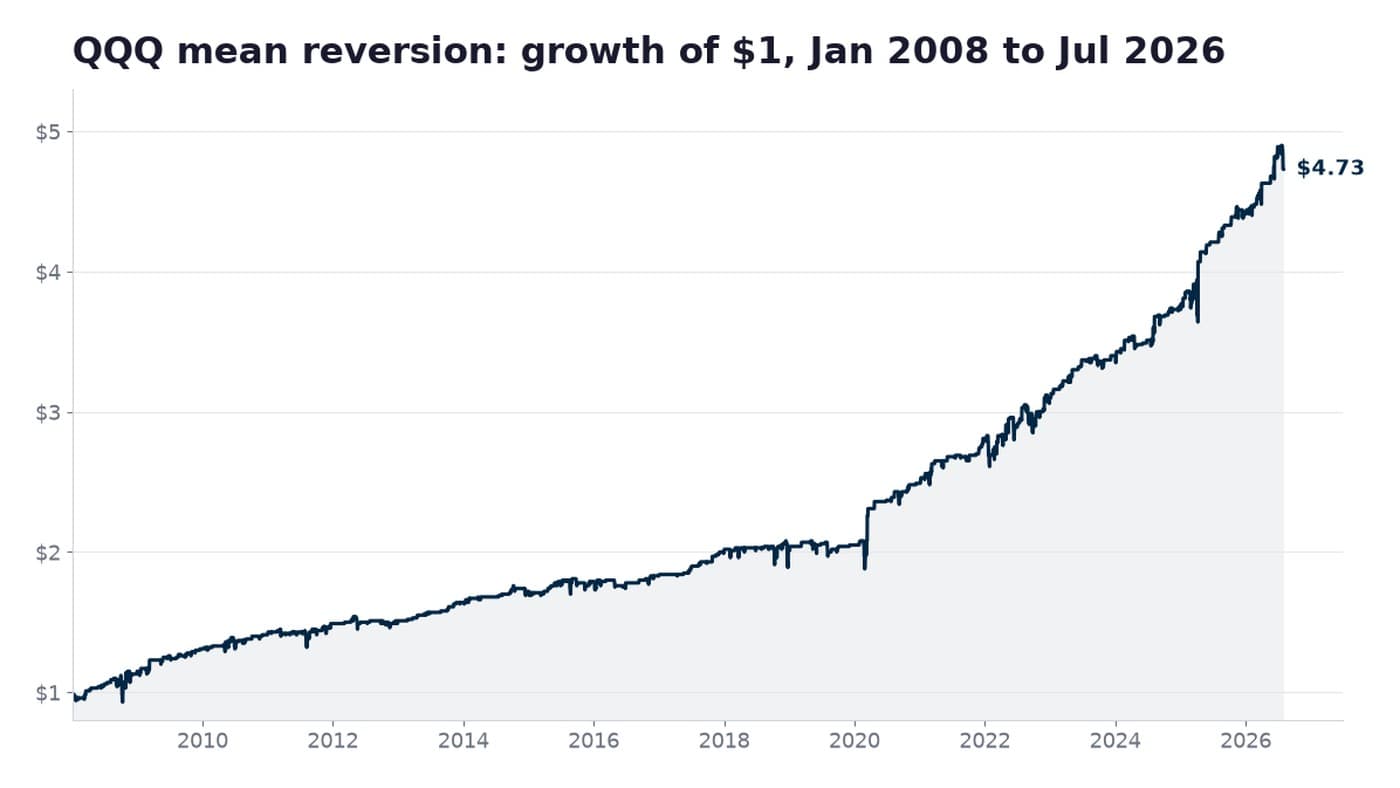
The test covers multiple materially different equity regimes, including the Global Financial Crisis, COVID, the 2022 bear market, and subsequent recovery.
Drawdown
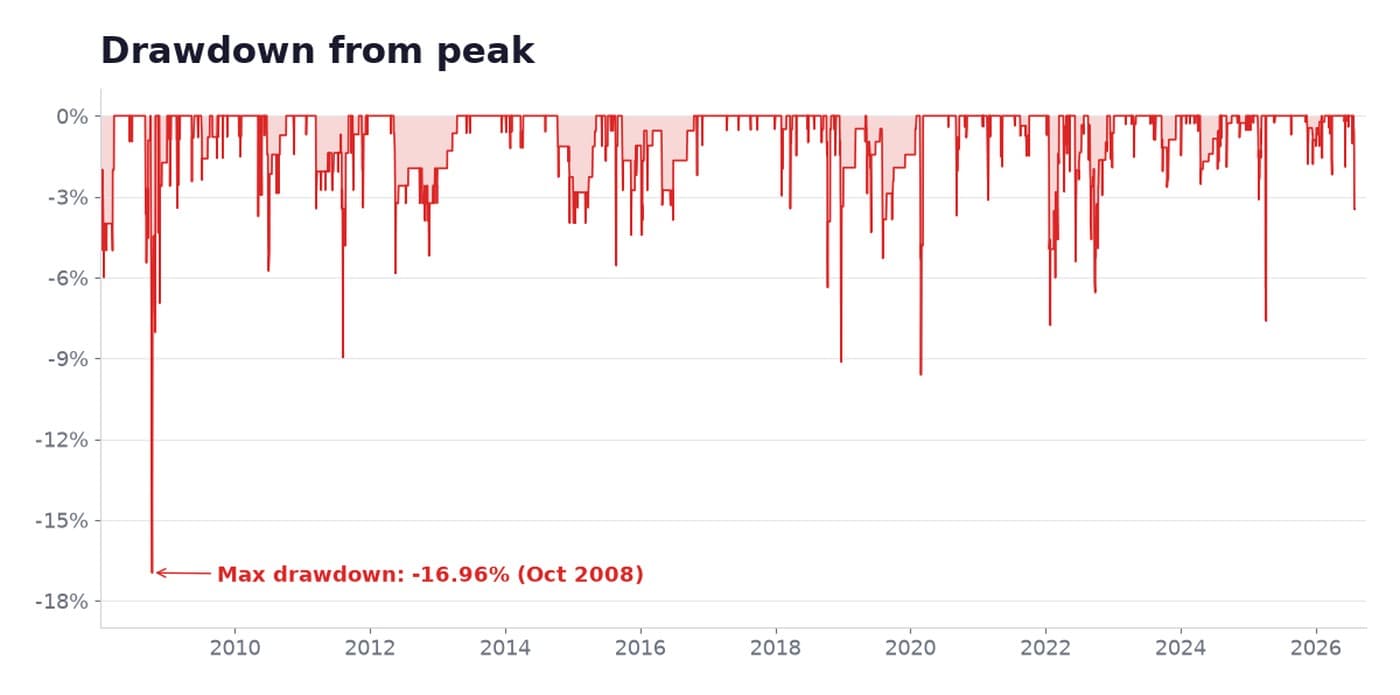
Maximum historical drawdown: -16.96%.
The important question is not whether a strategy experiences drawdowns. Every systematic edge does.
The question is whether those drawdowns occur differently from the rest of the portfolio.
Edge changes through time
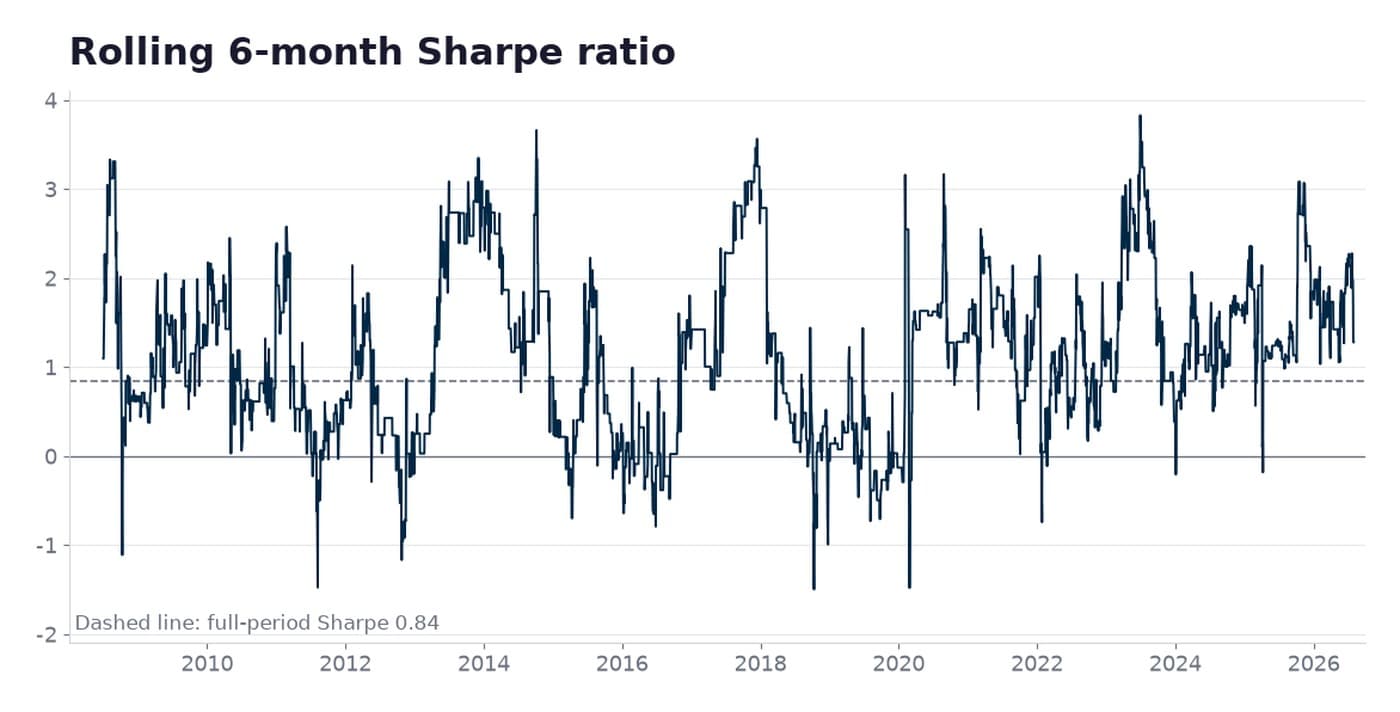
As expected, the rolling Sharpe shows clear stronger and weaker periods.
Different strategies have different favorable regimes. That is why the portfolio combines multiple independent return drivers instead of depending on one model.
Expanding beyond crypto
This QQQ sleeve is the first traditional-market sleeve in the Robuxio Crypto portfolio, traded as a crypto RWA perpetual. That is a different game from our equities portfolio: a limited universe, lower liquidity, and higher fee and market impact.
Several more RWA models are already in the incubation period. The process is straightforward:
- 1Economic or behavioral hypothesis
- 2Robustness testing
- 3Out-of-sample validation
- 4Incubation
- 5Live monitoring
- 6Portfolio integration
As the research continues, we plan to add more RWA models when they pass the same validation process.
More strategies. More independent return drivers. Less dependence on one asset class or one regime.